Showing posts with label EHRC. Show all posts

Sunday, 30 April 2017

Disablies are Dying in the UK


I have been having a really bad few months.


Since prior to my housemate finding new employment, I have been trying to obtain a formal statement of need from my local social services.  I had one but being socially minded, I chose to let my housemate look after me whilst he was unemployed, thus saving the Council money in paying for formal carers. A social worker got involved this time, instead of the usual council assessors. The assistance was requested in October, and only just before this bank holiday weekend did the social worker contact me with her assessment, which completely ignores my known needs as backed by my own G.P. (family doctor). This will now of course require me to appeal, further delaying the assistance I need to eat, take medications and deal with my personal care. My housemate now is so fed up of it all, that he has decided to throw his hat in the ring and advise Trafford Council that they either come up with an appropriate care package, or he will refuse any caring for me. This of course will then mean the council and social services will have to provide a much more expensive package as well as the cost of more frequent visits from the social worker and other bureaucrats. There is a social care crisis in England & Wales: tens of thousands of elderly, disabled and sick folk cannot obtain a care plan and thus the care they need just to stay alive.

I was assaulted and injured in December by an acquaintance who knew full well I am disabled and could not fight back. Because he is dating one of my good friends I feel constrained about reporting it to the police, as he would end up with a criminal record and the likelihood is that he would lose his livelihood. This then would likely put inordinate pressures on my friend’s affinity. The evidence is mixed, but the general consensus is that disability hate crimes have been on the increase since 2010. A report by the EHRC was misreported as stating that there had been no increase; but the agency swiftly issued a clarification. Unfortunately, by then the media was reporting the non-increase in hate crime...

In January I finally received my electronic Personal Independence Payment (PIP) claim-form from the UK’s notorious Department for Work & Pensions (DWP). It was necessary to get my Member of Parliament (MP) involved as the DWP were very reluctant to assist me with a non-paper form and provide me with one that could be completed via computer. This is a legal requirement of UK anti-disability discrimination legislation. However the DWP regularly fails to issue forms appropriate to inter alia blind & partially-sighted folk, for example, so is constantly breaching the Law. They also do not publicise the email address from which one can request accessible format forms. I only found it out due to having connections from my disability rights activism. (Ultimately I hope to lodge this issue with the Equality & Human Rights Commission (EHRC). Unfortunately, the UK government has cut this body’s funding to the bare minimum, so that it is now very difficult for them to fulfil their statutory obligations.) Due to arthritides writing for me is exceptionally difficult if at all possible. The form is actually a forty-plus A4 page booklet. I have cognitive difficulties at the best of times; but during the winter months my (progressive) aphasia is at its worst. Thankfully, I dealt with a very understanding civil servant who permitted an extension, so I had sufficient time to fully answer all the questions. It is now more than two months since the DWP received my claim and I have still had no decision.

Very large numbers of disabled individuals have been losing their disability payments as they are moved from Disability Living Allowance (DLA) the UK’s previous, far from generous, top-up payment for the extra costs incurred by those with impairments and disabilities. Losing this extra cash is not the only ramification of being found ineligible for PIP. It is an access payment to other social security benefits, such as housing benefit and the Motability scheme, whereby one is entitled to an adapted vehicle, electric wheelchair &/or mobility-scooter. Tens of thousands of disabled folk have had their adapted transport confiscated and are now trapped in their homes, many also have lost their jobs as they are unable to access public transport. The Citizens’ Advice Bureaux (CAB) network has calculated that some half a million disabled will lose out under the UK government’s cuts to benefit payments.


[*TRIGGER WARNING* Please do not continue reading if discussion of death/suicide may upset the reader!]

One of the most under-recorded and under-shared issues occurring in the UK is the sheer huge numbers of disabled people who are being “nudged” to commit suicide or are dying due to lack of food, appropriate medicines, accommodation that means they can lead independent lives, etc. The UK has gone from being one of the better countries supporting disability rights globally, to a pariah state quietly killing off its disabled & chronically sick populace. The mass media all but refuses to report on these issues, due to being in the main controlled by supporters of the ruling party. Only a few weeks ago one of these right-wingers suggested that it was appropriate that disabled folk and poor folk committed suicide in order to reduce the burden on the country’s economy - sounds similar to the polemic of 1930’s Europe and the USA, when it was euphemistically called eugenics and which led ultimately to the deaths of millions, a genocide. Currently the numbers dying due to the failures of the UK state are in the tens of thousands. This is termed ‘democide’. But when does democide become genocide?


The United Nations (UN) has already published three reports heavily critical of the UK’s approach towards the vulnerable in British society. A fourth report is due after the snap election, so too late to have any real effect on the electorate - assuming, of course, the media actually reports on the findings.

Europe has been asked by several disabled people’s organisations (DPOs) to investigate the deaths of we disablies. Up to now they have refused to do so. The UN can only write report after report. Meanwhile more disabled folk die needlessly each and every day. The relevant European Commissioner appears to have made no public statement about what is occurring in Britain. The European Union (EU) also appears completely unprepared for the tsunami of disabled/chronically sick people who will flood into Europe once BREXIT is complete, if not beforehand.

My academic background means I should have preferred to publish this blog completely annotated with supporting links to documentation, reports, statistical analyses, etc. Alas, I am not well enough to do so. However, my long-term readers know I do not exaggerate. Please do your own searches to check the facts.

The United Kingdom IS KILLING disabled &/or chronically sick individuals: family members, friends, neighbours, community members…… NO-ONE is lifting a finger to support us. I can only hope that this blog will survive to record what is happening here and that historians will once again record that the world stood by why innocents were killed by an uncaring state.

Please stand witness with me & my ilk!

*

This blog-post is published as part of Blogging Against Disablism Day 2017 (#BADD2017). For this year's articles and previous years' archives, please see here.


Friday, 23 September 2016

UNCRPD Survey for DRUK


Disability Rights UK are running aseries of meetings around the countries to obtain feed-back from people with disabilities and their carers about the issues that concern us in order to feed into the United Nations's review of the application here of UNCRPD (which we ratified in June 2009).


Naturally many if not most of us cannot attend these sessions, so DRUK (logo below) have set up a two page survey: the first page is contact details; the second the issues each of us considers to be important. The answers here can be as short or as long as you require.


I have detailed my responses below, as this might prompt your own responses.


*


What are the priority issues that you believe should be included in our report to the UN Committee on the Rights of Persons with Disabilities?

i) financial support issues, especially removal of benefits from those with disabilities;
ii) accessibility issues (transport, buildings, websites, new products);
iii) onerous re-assessments (WCA/ESA/PIP) for those who are not going to ameliorate (based on dogma, not efficiency savings);
iv) excessive bureaucracy - need one system that can be used by NHS, social services & DWP;
v) countering anti-disability rhetoric & polemic - law to prevent MSM & politicos from inciting hatred; law to ensure balance of views on MSM, so that free speech is protected but not to the detriment of disabled & other minority groupings; jurisprudence system must take issues seriously & rigourously use appropriate laws for prosecustions & sentencing;
vi) independent ODI at arms-length from Govt., but given appropriate powers and funding to investigate disability issues both for the individuals concerned & whole of society;
vii) separation of disability issues from EHRC and re-establishment of a truly independent DRC (if indy ODI not poss), as the former has failed (as predicted) to rigorously pursue disability issues, but given appropriate powers and funding to investigate disability issues both for the individuals concerned & whole of society.


Only since approximately 2010 have I felt fearful of my own government & fellow countrymen. I used to regularly go out & about in my mobility-scooter, but after the co-alition govt. took power the politicos & MSM launched frequent attacks against disabled folk, with much press being given to "scroungers" and defrauders. I stopped going out in my scooter and sold it last year, as I received abuse every time I went out, from students at the local college and from traffic passing me on the main road. I am now on anti-anxiety medication. Strangers now (contrary to previous British reservedness) approach one and believe it their right to question one about one's condition, disabilities and right to receive social security payments.
 

Evidence:
i) Plenty of examples of hardship and even death due to DWP's sanctions régime have appeared in press, websites and via activist groups.
ii) The DDA was introduced in 1995, but still inaccessible buildings, road-crossings, & other structures are built. Local Authorities ought to be obliged to factor in access issues at the planning-approval stage, rather than the onus being on disabled folk to sue once a structure has been constructed.
iii) I have severe ME as defined by NICE and my NHS consultant. There is NO scientific evidence that folk in said category ameliorate. Yet DWP still re-assesses periodically. This is detrimental to my & many others' health, as stress pejorates our illness. The assessment régime is thus making us worse. This also wastes public money. There is already a clause that every benefit-recipient has to sign confirming that we will notify DWP of any amelioration/pejoration. A sytem based on trust would be much more cost-effective. Therefore one has to conclude that the system is deliberately antagonistic for dogmatic reasons.
iv) Forms have to be completed for every single agency, much of the information requested is the same. So the booklets (c. 40 pages so not mere forms) for ESA and PIP have much overlap; as do the ones for social services; then the care agencies want the same info again. I imagine that much of this info would also be useful for the NHS - reducing bed-blocking, ensuring continuity of care, etc.
v) There was some research done into bias in MSM - sure you know of it. However some mainstream TV channels still produce voyeuristic programming into the lives of folk dependent on social security.
There has been some evidence that the CPS and the courts are failing to use current laws, although the former recently announced an increase in the past year of prosecutions. Judges appear unwilling to use the law that permits extra sentencing where a disability hate aspect occurred.
vi) The ODI is a vassal of the DWP. I have covered on my own blog the annual failure of this department to support UN Enable's "International Day of Persons with Disabilities" and the pertinent issues raised each year (http://crippledqueeranglo-europeanranter.blogspot.co.uk/2015/12/international-day-of-persons-with.html ; http://crippledqueeranglo-europeanranter.blogspot.co.uk/2014/12/international-day-of-persons-with.html ; http://crippledqueeranglo-europeanranter.blogspot.co.uk/2013/12/international-day-of-persons-with.html).
vii) The EHRC published a list of questions it wanted answered by the Govt. in 2014, nearly five-and-a-half years after UNCRPD was ratified by UK - in the meantime disabled folk were starving, commiting suicide and dying due to UK govt. policies (http://crippledqueeranglo-europeanranter.blogspot.co.uk/2014/12/monitoring-uncrpd-in-uk.html). I feel certain a dedicated DRC would have acted much faster seeing the toll of suffering my fellow disablies were experiencing.


*


Please do respond if you are able, as the more of us that do so, the better DRUK's response to the UN. Cheers!


Thursday, 18 December 2014

Monitoring UNCRPD in the UK


[Image Description: EHRC logo and tag-line, "Creating a fairer Britain"]


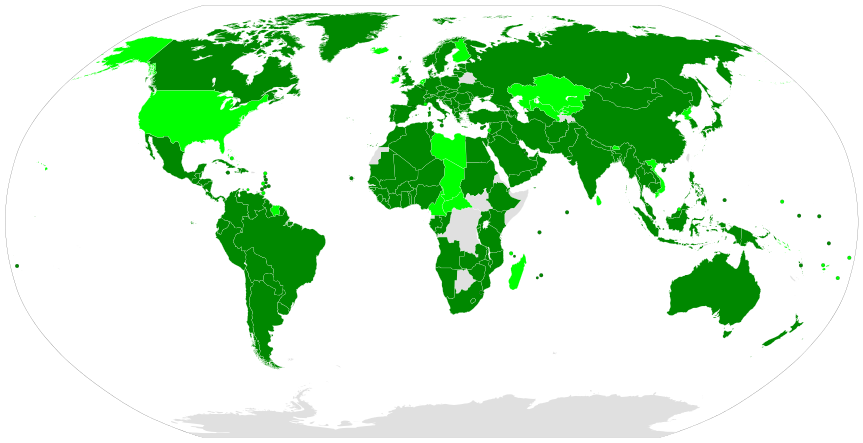
At the beginning of December the Equality & Human Rights Commission (EHRC) published Monitoring the Implementation of the UNCRPD, its review of issues arising from the implementation or lack thereof of the United Nations Convention on the Rights of Persons with Disabilities (UNCRPD) which the United Kingdom signed up to on 30th March 2007 and ratified on 8th June 2009.


[Image description: map indicating countries that have: ratified UNCRPD, dark green; those that have signed, light green; those that have not signed, grey. Via Wikipedia, © Louperivois]

If the reader has not heard of this report, I am not surprised. I could not find any reference to it in the news section of google. As many will know, I am a bedtivist and as such reasonably aware of the UK situation. However, had it not been for Ian Jones, one of the prime movers in the conception of the WoWPetition, and now involved in the WoWCampaign, I should have known nought about it. It appears to have been completely ignored by British mainstream media (MSM). I suspect this is hardly surprising given how negative the report is, including criticism of the MSM itself.

However, I ought to add, that I also was totally unaware of the EHRC's request for information from folk with disabilities. Perhaps others did hear about it and managed to give some input and feed-back.

Throughout the report, the EHRC includes questions that the UN's oversight committee needs to put to the UK government. Rather handily they are collected together in an annex (pp.39-44) to the document. I list them below (© EHRC).

List of questions UKIM recommends that the CRPD Committee ask the UK:
1. To explain how the UK and devolved governments take into account the UNCRPD in the development and implementation of all new and existing policies, programmes, and legislation and how this action is co-ordinated at national and UK-wide level. 
2. Do the UK and devolved governments intend to implement the JCHR’s recommendation and, if so, when? 
3. To describe the measures in place to ensure that public authorities, including councils, are aware of and act in conformity with the Convention and the outcomes of those measures. 
4. To detail, with examples, how the UK and devolved governments ensure the active involvement of disabled people and children in the development and implementation of legislation and policies and the effect of this involvement. 
5. What measures the Northern Ireland Executive has taken to ensure that the legislative protections for disabled people in Britain are available in Northern Ireland. 
6. What steps has the UK taken to monitor and remedy the different treatment of disabled children seeking redress against discrimination or harassment in schools with regard to access to compensation and injunctive relief? 
7. To outline the availability of specialist services that are accessible to disabled women who experience sexual or domestic abuse. Where these services are provided locally, how do the national governments meet their responsibilities by collating information on service availability and adequacy? 
8. To evidence how local and national domestic violence strategies, policies and programmes identify the needs of disabled women and ensure disabled women are able to use domestic abuse services. 
9. To detail the methods by which the views of disabled children and young people are respected fully and taken into account in the development of UK and devolved government strategies, policies and programmes on disability and children and to evidence the effect this has had.
10. To explain the initiatives that have been taken to reduce the number of disabled children living in poverty and the effect these initiatives have had.
11. To evidence how the particular needs of looked after disabled children are being addressed, the measures that have been taken to ensure they receive the support and care needed and the outcomes achieved by those measures. 
12. To detail the steps taken and outcomes achieved to initiate and encourage public portrayals of disabled people, including through government communications that are consistent with the purpose of the Convention. 
13. To provide current data on the extent to which accessible housing is available across the UK and information on how the UK will ensure that new and existing housing is accessible and can be easily adapted when people become disabled. 
14. To explain the steps taken to improve access to the built environment including ensuring that public and private organisations comply with accessibility standards and to detail the effectiveness of these steps. 
15. To explain the steps taken to ensure that street designs are accessible to and do not put at risk people with visual and other impairments and to detail the effectiveness of these steps. 
16. To provide evidence of the effectiveness of legislation and public initiatives aimed at improving transport accessibility (including bus, rail, taxi and transport by air and sea); and to explain how monitoring is undertaken to ensure compliance with and improvements to meet its obligations under the Convention. 
17. To provide an update on the steps taken to ensure the provision of information in accessible and appropriate formats, including Easy Read, and how the effectiveness of these measures is monitored.
18. To provide information on the availability of sign language interpreters, lip speakers and palantypists and the steps being taken to increase availability and ensure disabled people can access appropriate communication support in a timely and cost-effective manner. 
19. To explain how current suicide prevention strategies take account of the needs and circumstances of disabled people, in particular those with mental health problems, and to evidence the effectiveness of these steps in reducing suicide rates. 
20. To explain the steps taken to ensure that the UK carries out full and independent investigations into deaths in mental health care settings and to evidence the effectiveness of these steps. 
21. To explain how the effectiveness of the frameworks governing mental capacity in each nation is being monitored, what actions have been taken to improve the availability of support in decision-making and the outcome of such action.
22. To explain how the effectiveness of the safeguards, which are in place to protect disabled people from abuse, in particular financial abuse, are monitored, to detail the steps taken to eradicate such abuse and to evidence the effectiveness of such steps. 
23. To explain the measures taken to improve conviction rates where the victims of crime have mental health conditions or learning disabilities and provide evidence of the effectiveness of such measures. 
24. To explain the measures taken to support ‘vulnerable witnesses’ with mental health conditions and learning disabilities and provide evidence of the effectiveness of such measures. 
25. To explain how the impact on disabled people of the reform to legal aid and reduction in grants to advice agencies in England and Wales is being monitored and the steps being taken to address any negative effect.
26. To provide evidence of the effect on disabled people of the introduction of fees for employment tribunal cases and to detail the steps being taken to ameliorate any negative effect. 
27. To detail the measures that have, or will be, put in place in each nation to ensure that those who are unable to consent to their placement or treatment in psychiatric hospitals and other care settings are protected in law and to explain the monitoring and review mechanisms that have been put in place. 
28. To set out the steps taken to safeguard disabled people in health and social care settings, to monitor the effectiveness of such measures and to explain the progress that has been made since the submission of the Initial Report. 
29. To detail the measures taken to limit the use of physical and chemical restraint and to evidence the effectiveness of such measures. 
30. To provide an evidenced update on the progress that has been made in each nation since the submission of the Initial Report to improve the reporting and prosecution of disability-related hate crime.
31. To detail the initiatives taken to address disability-related harassment and bullying in schools and to evidence the progress that is being made in addressing this issue. 
32. To explain what steps it has taken to assess the overall, cumulative impact of welfare reform, changes to social care funding and eligibility criteria and the closure of the ILF on disabled people.
33. To explain what measures have been taken, and what impact they have had, to ensure that the reduction in central government funding to local authorities and health and social care trusts in each nation does not have a negative impact on the realisation of Article 19. 
34. To provide information about the steps taken to ensure local authorities understand the Convention rights when setting eligibility criteria for the provision of social care. 
35. To provide information on the numbers of local authorities that charge for social care and how charging policies are monitored to identify the impact on disabled people. 
36. To demonstrate, with examples, the extent to which measures taken in each nation ensure the portability of social care packages. 
37. What steps are being taken to move people with learning disabilities who are living inappropriately in assessment and treatment units to more suitable accommodation where they are able to live and participate inclusively in their local communities? 
38. What measures have been taken, and what impact they have had, to ensure that the closure of the Independent Living Fund (with the exception of Scotland) does not have a negative impact on the realisation of Article 19? 
39. To set out the initiatives undertaken in each nation to promote better understanding of the needs of disabled parents and the effect these initiatives have had, and explain what information is provided to disabled parents about pregnancy, birth and caring for children.
40. To explain how reform of the Special Educational Needs (SEN) systems in England, Wales and Northern Ireland, and the current Additional Support Needs (ASN) system in Scotland, will improve educational outcomes for and participation of disabled children and young people. 
41. To confirm the position in relation to inclusive education and explain how they will ensure the education system at all levels is inclusive and geared towards supporting disabled people to achieve their full potential and participate equally in society.
42. To provide information about the measures taken to identify and reduce both unlawful and lawful exclusion of disabled pupils across the UK and to explain how progress is monitored. 
43. To explain the steps taken to improve the process of transition for disabled children and young people from children’s education services to further education and employment services in each nation, the effect these are having and how progress is monitored? 
44. What measures have been put in place to address the health inequalities faced by people with learning disabilities and mental health conditions and to provide evidence of the progress that has been made to ensure they receive appropriate and tailored health care services. 
45. To set out the measures taken to ensure awareness and availability of advocacy services for people with learning disabilities and people with mental health conditions and to provide evidence of the effectiveness of those measures. 
46. To provide evidence of what progress has been made to ensure the safeguards provided for in mental health legislation operate effectively. 
47. To provide information about the steps being taken to ensure greater respect for the human rights of disabled people in mental health settings and to evidence the effectiveness of these steps.
UKIM recommends that the CRPD Committee ask the Northern Ireland Executive: 
48. To confirm when a new Mental Health Strategy for Northern Ireland will be adopted. 
UKIM recommends that the CRPD Committee ask the UK: 
49. To provide an update on progress made to address the employment and pay gaps between disabled and non-disabled workers.
50. To explain how the actions outlined in the Initial Report have created a positive approach by employers to disabled people; whether they are having the effect of addressing employers’ negative perceptions of disabled people as employees and, if so, how these initiatives will be extended. 
51. To explain how service providers delivering the Work Programme are ensuring that disabled people with complex support requirements have equal access to work and employment opportunities. 
52. To provide information on the steps taken to identity and address the impact of the various reforms to social security on disabled people’s human rights and the realisation of Article 28. 
53. To explain the measures taken to ensure that voting ballots, postal votes and information explaining how to cast your vote are available in a range of accessible formats. 
54. To explain how new technologies are being used to overcome the barriers that prevent disabled people from voting.
55. To explain how it ensures that polling stations are accessible.
56. To provide information about the steps taken in each nation to improve the representation of disabled people on boards of public bodies and how progress is being monitored.
57. To provide up-to-date information about the number of disabled people participating in sport and physical activity and the progress made in all nations since the Initial Report. 
58. To explain how the initiatives set out in the Initial Report have increased disabled people's access to and participation in cultural life. 
59. To provide information on the statistics and research data collected by the devolved governments to meet the requirements under Article 31. 
60. To explain how the disability equality indicators have been developed in accordance with the CRPD. 
61. What steps it has taken to identify and fill gaps in the collection of disability statistics, including measures to ensure this data is disaggregated by equality characteristics. 
62. To explain how implementation of the Convention is coordinated across all the nations and whether integrated action plans will be developed, with clear actions and time-bound indicators at the UK-wide and national level.
63. How does the UK ensure coordination on implementation across Government departments, in each jurisdiction? 
64. How does the UK intend to develop the framework for promotion, protection and monitoring implementation to involve and coordinate the work of key stakeholders? 
65. What steps it has taken – including details of what practical and financial resources it has provided – to ensure that disabled people and their representative organisations are involved and actively participate in the reporting process and how this is coordinated across the UK. 
66. What steps it has taken to review, and details of any evidence relied on as the basis to retain the reservations and interpretative declaration. 

I hope the reader took the time to read the whole list, as it concisely reveals the full horror of the situation faced by impaired Brits disabled by British society due to an uncaring, intolerant and heedless UK government.

Ian Jones' own shock and exasperation is tangible in his comments attached to the update in which he shared the EHRC's interim report (bold text is this author's highlight).

I am stunned by this! The UNCRPD was ratified in the UK in June 2009 and I cannot understand why the Equalities and Human Rights Commission, the Joint Committee on Human Rights or the Disability Commissioner Chris Holmes did not ask these questions then and keep asking them until they were satisfied with the response.
Just another example of how Disabled People have been betrayed by those that claim to act in our interests.

What the heck have these organisations actually been doing whilst folk are starving, freezing, committing suicide or dying due to failure to make social security payments to which they are legally entitled or making them aware of Short Term Benefit Advances which replaced Crisis Loans?

I personally have never felt so threatened as I have in Britain under the ConDems. I pray that the general election next May brings in a more compassionate government. However, I shall not be holding my breath as four of the main parties (Conservative, Labour, Liberal Democrat and UKIP) are all neo-liberal, none of which wish to genuinely support disabled folk - in my opinion of course.

And a final comment: there appears to be no mention or reference in the whole document to folk with disabilities who come from BME or Queer sub-cultures. Like women, who are in fact mentioned, these groups are doubly discriminated against and often - as here - invisible to the Establishment.

Thursday, 20 June 2013

In/accessible Europe (5): Glasgow Gay Nightscene

Last year I blogged on disabled in/accessibilty in Manchester's Gay Village. Manchester City Council are not interested in determining what venues in Manchester are accessible, whether for its own residents or for (potential) tourists. Manchester's main LGBTI organisation, The Lesbian & Gay Foundationis similarly disinterested, although they have given me the opportunity to write about the issue for them. With one in eight folk in the UK being disabled, one can but assume in the absence of any research that one in eight of Manchester's population, that one in eight queer folk are also disabled. Businesses and thus taxpayers are losing out on a mainly untapped market. Disabled folk's lives are diminished by not being able to fully participate. And this is despite it being eighteen years since the original Disability Discrimination Act was introduced in 1995.

The following is a reblog with permission from the author Rob McDowall of LGBT Network. It highlights related issues in Glasgow's LGBT service industries.


[Image description: gay rainbow flag background; international disabled symbol on top.]


Is being LGBT and disabled: The final taboo?

You may have heard of the story of Robert and Nathan Gale who were refused access to Glasgow’s Polo Lounge on 14th June due to Robert being in a wheelchair. The couple decided to attend the gay club to celebrate after winning an award at the Scottish Charity Awards for their work on the Scottish marriage equality campaign and soon discovered the door staff and manager had other ideas.

Glasgow’s gay scene is dominated by one organisation with the lion’s share of the most well-known and well attended gay bars being owned by millionaire businessman Stefan King’s G1 Group. Aside from the usual consideration of lack of competition some believe there can be positives in marketplace domination which can result in cheaper prices for the customer due to the stronger buying power the establishment wields. Having lived and socialised in Glasgow for the last twelve years I have noticed the increasing grip that G1 has on Glasgow’s gay scene and have seen the prices rise, choices reduced and the ‘shut up or stay out’ attitude flourish. Gone are the days when complaints are seen to provide an opportunity for improvement and when the business will take great care and attention to ensure the customer is happy. In Glasgow many gay people are only too aware of the hasty sanctions dished out by G1 managers for daring to write a letter or email of complaint.

As someone who lives in chronic pain following a horse-riding accident as a child, I use a crutch most of the time and can find it very difficult on a bad day to ascend and descend stairs. It is equally difficult to try and squeeze into a small cubicle while keeping my foot against the door due to the broken or absent locks within the Polo Lounge toilets. I refuse to stand at the urinal due to the two-way mirror to the right of the urinals which would give anyone walking into the toilet clear sight down the line of urinals. Happy to report however that the growing disgust over the two-mirrors in the female toilets of G1’s Shimmy club has led to the two-way mirror in Polo Lounge’s male toilets being covered up with a black vinyl and gold material—not very fetching, but it serves its purpose

In my capacity as Chair of the LGBT Network, I was contacted by three disabled patrons in April who reported similar entry refusals at Polo and I put pen to paper and sent a complaint letter to Polo Lounge and G1’s head office. Needless to say I am still awaiting a substantive reply. In what I have come to expect typical G1 standard operations my follow up emails, letter and telephone calls have failed to raise any reply at all, let alone a satisfactory one. G1 are no strangers to controversy; as mentioned above the Shimmy Club attracted widespread repulsion at the revelation that men could hire out a room which featured a two-way mirror facing into the women’s toilets and since the news broke Glasgow City Council have imposed a week long closure order by suspending the club’s liquor license for putting women and teenagers at risk from “predatory behaviour”. In April 2010 a blind musician was told she wouldn’t be allowed into G1’s Underground nightclub in Dundee because the club’s insurance “did not cover blind people” and her cane was “too dangerous” for other patrons.
The LGBT community are marginalised enough in a hetero-normative society and many seek a safe and courageous space where they can be themselves without any pressure, we are told, to confirm or to adhere to societal ‘norms’. Gone are the days of the dark, dismal and shoddy clubs that only the regulars knew about with entrances at the bottom of alleyways replaced by glitzy and glamorous, ‘loud and proud’ establishments with glamorous promotions, street PR teams and pride flags standing proudly above doorways. One only has to look to Manchester or Soho to see the influence the LGBT community have had on the area in which they live and socialise. Parts of the Merchant City is to Glasgow what Canal Street is to Manchester; a collection of ‘gay’ or ‘gay friendly’ pubs and clubs within a well-defined area. Glasgow currently has nine licensed premises which define as ‘gay’ or ‘gay orientated’ with all of them being within a 10 minute walk of Glasgow Central and Queen Street stations. In addition to the main ‘gay’ nightspots a number of establishments dotted within most areas of the city are very non-specific and offer a welcoming and tolerant nightclubbing or beer swilling experience to heterosexual and the LGBT communities alike.
You may imagine that with the Stonewall riots etched into our memories and years of blatant homophobia, intolerance and hate that ‘gay’ pubs and clubs would throw open their doors and welcome the LGBT community, in all their shapes and forms, with open arms… well, you would be wrong! Image is everything and, regardless of the labels we wear, intolerance is all too rife within the LGBT community especially when it comes to socialising in an LGBT orientated nightspot and you happen to be disabled. Disability is a label which comes in all sizes and fonts and some people identify as disabled while others don’t. It is a label like all others and it’s one which in one respect may improve one’s life with regards the ability to secure the support, care and assistance one needs to play a full part in society but is one which all too often can be used to hit one over the head and create division and barriers to the enjoyment and living of life. Disability is a reality for someone living as a disabled person and disabilities come in all shapes and sizes… gone are the disability registers and Hello is the Equality Act with its very open and legalistic definition of a disability and who may be treated as a ‘disabled person’ in law. Accessibility, or in the cases highlighted above, the lack thereof, is a major point of consideration for any disabled person when choosing where to visit and when, and while where your friends prefer going is important, for a disabled person the existence or absence of a ramp, accessible bathroom and wider doorways for access and egress may be the deal breaker. After one too many beers or shots many of us may end up crawling at the end of the night but who would expect to start their night by having to demonstrate their ability to convey themselves from point A to point B while causing themselves pain, discomfort, and probable embarrassment by crawling across the floor like Robert Gale in the Scotsman article mentioned above. It isn’t my idea of fun and I’m pretty confident it wasn’t Robert’s or his doting partner’s either.
Prejudice exists in all factions in society and is class, race and gender blind and sprawls across all territories and countries throughout the world. The presentation of prejudice may change from one region or country to another but the premise is the same and the effects on the victim and society are comparable. I am not a crazy far-left liberal who wants to create an ‘adopt a disabled person’ day or mandate for the compulsory closing of non-accessible establishments, all I am asking for Is for planning, common sense and compassion when it comes to accessibility and making reasonable adjustments for disabled patrons. I feel it is perfectly reasonable for a multimillionaire businessman to make adaptations to the building at the Polo Lounge which actually houses three G1 ‘gay’ establishments (or four if you count the club within a club) with all but one of them sharing the same toilet facilities.
I raised Robert’s and Nathan’s experience with the Equality and Human Rights Commission in Scotland and their Head of Legal told me ‘There is a legal duty to make reasonable adjustments for disabled people when providing goods, facilities or services. What can be considered “reasonable” will vary depending on the circumstances, but service providers must anticipate the needs of disabled people and ensure they meet the law. Every effort should be made to make the business/service as inclusive as possible.
‘A disabled person should never be made to feel humiliated or disenfranchised by the behaviour of a service provider. Unfortunately the truth is that not all services or buildings are accessible to disabled people, but at the very least everyone should be afforded basic dignity and respect.’
The building housing the Polo Lounge at 84 Wilson Street, Glasgow is a Grade A listed building and while the Equality Act 2010 and its predecessor the Disability Discrimination Act 1995 (DDA) does not override other legislative provisions in relation to making adaptations to listed buildings and those businesses occupying listed buildings are still required to make the necessary adaptations to comply with the Equality Act. Service providers are required to make the necessary application to the relevant local authority, in this case Glasgow City Council for consent to carry out the adaptations required to bring the facilities to a compliant standard. While G1 may assert that their occupation of a Grade A listed building would prevent them from making any substantial changes to the fabric of the building, this would be a defence of convenience and unless permission from the council has been sought and refused then the defence asserted becomes transparent.
I trust that with the media spotlight on G1 again, that Stefan King will take this opportunity to put things right and will properly engage with and listen to the often silent members of the disabled LGBT community most of whom it would appear from recent events and behaviours are not welcome in G1’s gay venues within Glasgow.
Robert and Nathan Gale setup a Facebook group which calls for people to boycott G1′s establishments and lists ways people can assist their campaign including writing to Glasgow City Council’s licensing board and attending a demonstration which is still to be planned. The couple has asked G1 for a written apology and compensation in addition to various pieces of information regarding disability access.
What do you think? Is the LGBT community accepting of disabilities? Do you have any experiences of G1 regarding access problems for disabled people?

*********

For Update see here.

Monday, 3 December 2012

Who represents disabled folk?

I recently had a twitter discussion (q.v. if so wished; I am @criquaer) with the erudite Neil Crowther (@NeilCrowther, who has his own website neilcrowtherconsulting.com which is well worth dipping into and reading) in which we debated the relative merits of the Equality & Human Rights Commission (EHRC). Now I am not particularly learnèd in the area of the EHRC but I have had several interactions with them, none of which ended fully positively.

I started this blog because of concerns about the EHRC, see Disabled Travel and the Equality & Human Rights Commission which gives some slight background. For more detailed information refer to Wikipedia.

"We have a statutory remit to promote and monitor human rights; and to protect, enforce and promote equality across the nine "protected" grounds - [including] disability..." EHRC

Now I am just a layman, but that suggests to me that any area of life where disabled folk do not have equality is up for grabs and ought to be an area of concern for the EHRC.

According to the Office for Disability Issues (ODI), a part of the Government structure:

Post-19 Education
  • Disabled people are around twice as likely not to hold any qualifications compared to non-disabled people, and around half as likely to hold a degree-level qualification [7]
  • 20 per cent of working age disabled people do not hold any formal qualification, compared to seven per cent of working age non-disabled people [8]
  • 14.5 per cent of working age disabled people hold degree-level qualifications compared to 26.8 per cent of working age non-disabled people [9]

Employment


  • According to the Labour Force Survey, disabled people are now more likely to be employed than they were in 2002  - the employment rate gap between disabled and non-disabled people has narrowed slightly by 5.8 percentage points and currently stands at 29.9% in 2012
  • However, disabled people remain far less likely to be in employment. In 2012 46.3 per cent of disabled people are in employment compared to 76.2  per cent of non-disabled people

From these statistics it can be seen that disabled folk do not have parity in educational and employment outcomes. Given the huge differences this can only be put down to discrimination and/or lack of equality of opportunity. These problems have been known about for more than a decade. Here one can find the link to the EHRC's statement on how they are addressing the various conventions within the United Nations (UN) Convention on the Rights of Persons with Disabilities.

Perhaps the EHRC are actually doing something proactive. Have the general public heard about any such actions? To be fair are the ODI doing anything? Anyone, other than specialists and consultants, heard about their work? Is the UN doing anything?

The European Commission has a European Disability Strategy which advises that:

The strategy's targets for the first five years include:
  • devising policies for inclusive, high-quality education
  • ensuring the European Platform Against Poverty includes a special focus on people with disabilities. The forum brings together experts who share best practices and experience
  • working towards the recognition of disability cards throughout the EU to ensure equal treatment when working, living or travelling in the bloc
  • developing accessibility standards for voting premises and campaign material
  • taking the rights of people with disabilities into account in external development programmes and for EU candidate countries.

Disabled folk are dying "with recent evidence of 73 deaths and suicides per week" in relation to Work Capability Assessments (WCA) per Disabled People Against Cuts (DPAC). What action have the EHRC, ODI, EU or UN taken? And if they are doing something, why do we not know about it?

One might argue that disabled folk should not expect governmental bodies to look out for their interests, that really it is up to the individual to do so. Of course, many disabled folk are just not able to do so. This is where charities are supposed to step in. Well one of the ODI's favourites and 'privileged' charity is Disability Rights UK (DRUK). Amongst the disabled community they are infamous because of their chief executive's Sayce Report and have lost much credibility for being seen as the Government's henchman, specifically in relation to Remploy. On 28th November another group of charities became tarnished, Sick and Disabled Claimants Now to Be Sent on Workfare (by the same charities who claim to support them) including:

"Charitable Work Programme sub-contractors include @scope,  @MindCharity, @mencap_charity, @RNIB, @LCDisability, @salvationarmyuk, @AddactionUK

Charities who exploit workfare staff include @thebhf, @barnardos, @age_uk, @CR_UK"

Since then Cancer Research UK and the British Heart Foundation have decided to withdraw from the workfare schemes and Scope are reviewing the matter. This discrediting of charities, who are supposed to be supporting us, has meant a damaging backlash and concomitant fall in trust. See for example the comments after Neil Crowther's article for DRUK To eliminate hostility towards disabled people we must cut the deficit.

My suggestion to Neil Crowther was:

 Or actually seek disabled folks' views (not charities') for our priorities to determine their agenda. 


He responded:


 why do you believe was based on charities views? EHRC had & has a statutory Disability Committee made up of disabled people


 like Jane Campbell, Mike Smith, Alun Davies, Andrew Lee, Rhian Davies, Kirsten Hearn & Saghir Alam


I doubt many of us have heard of these grandees. I myself have only heard of Mike Smith and that is due to correspondence with the EHRC.

Why should not all the organisations in this article seek out the opinions of their users, donors and stakeholders? Why do we little people not get to have a say? There will always be a need for specialists and experts, but that does not mean that we should be told our priorities or have our choices decided for us. Of course, there will always be a need to give some weighting to minorities within our community who otherwise might never get a say, such as BME disabled folk, or LGBTI disabled persons (which includes myself!). But that alone should not be used as an excuse not to have regular listening exercises and consultations.

Who represents we disabled? Who should?


This article is part of "International Day for Persons with Disabilities".