Showing posts with label ConDem. Show all posts

Friday, 8 May 2015

Farewell to the United Kingdom; Good-bye England

In view of the 2015 general election results for the United Kingdom (although probably not united for very much longer!), it is with great sadness that I am informing all my readers that I shall now have to leave England for good.

As those of you who have been following this blog, my facebook page and/or my twitter account will know, under the ConDems - due to actions by the Department for Work and Pensions (DWP), the mainstream media (MSM) and the government itself - I had to go back on to anti-anxiety medication. I cannot take another five years of persecution and harassment and live in constant fear of the DWP and the country's Government.


[Image description: Inverness airport & environs]

My ex-partner & best friend and I are now making plans to move to Scotland. At least there will be an NHS there to care for me. I have asked friends living and working in Inverness to advise us of some good estate (real estate)/rental agents, so that we can begin making enquiries. We shall also be looking to rent out our current home pro tem. However, if it looks like any EU referendum means an exit from Europe, that too will be put up for sale.

I am aware that several of my real-world and social-media friends are Conservative party voters: thank you for not gloating about your political party's victory; your sensitivity is appreciated.

Finally, those quislings, the Liberal Democrats, got what they thoroughly deserved; duplicity is one trait I cannot abide. I apologise for voting for them for so many years believing the party to be filled with folk of integrity - I was so wrong. To the Green party: you can hold your head up high; thank you for being a voice of reason amidst all the screeching, dominating, Neo-liberal cacophony.

England, I shall miss my incorrect view of you and despise the wicked, uncaring self you have revealed yourself to be. If there is a G_d, I hope s/he helps the meek, because the English certainly will not be your Good Samaritans.

Thursday, 18 December 2014

Monitoring UNCRPD in the UK


[Image Description: EHRC logo and tag-line, "Creating a fairer Britain"]


At the beginning of December the Equality & Human Rights Commission (EHRC) published Monitoring the Implementation of the UNCRPD, its review of issues arising from the implementation or lack thereof of the United Nations Convention on the Rights of Persons with Disabilities (UNCRPD) which the United Kingdom signed up to on 30th March 2007 and ratified on 8th June 2009.


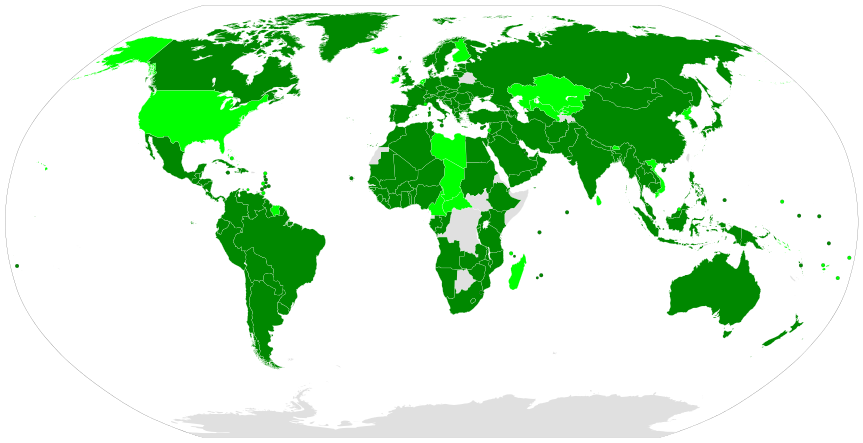
[Image description: map indicating countries that have: ratified UNCRPD, dark green; those that have signed, light green; those that have not signed, grey. Via Wikipedia, © Louperivois]

If the reader has not heard of this report, I am not surprised. I could not find any reference to it in the news section of google. As many will know, I am a bedtivist and as such reasonably aware of the UK situation. However, had it not been for Ian Jones, one of the prime movers in the conception of the WoWPetition, and now involved in the WoWCampaign, I should have known nought about it. It appears to have been completely ignored by British mainstream media (MSM). I suspect this is hardly surprising given how negative the report is, including criticism of the MSM itself.

However, I ought to add, that I also was totally unaware of the EHRC's request for information from folk with disabilities. Perhaps others did hear about it and managed to give some input and feed-back.

Throughout the report, the EHRC includes questions that the UN's oversight committee needs to put to the UK government. Rather handily they are collected together in an annex (pp.39-44) to the document. I list them below (© EHRC).

List of questions UKIM recommends that the CRPD Committee ask the UK:
1. To explain how the UK and devolved governments take into account the UNCRPD in the development and implementation of all new and existing policies, programmes, and legislation and how this action is co-ordinated at national and UK-wide level. 
2. Do the UK and devolved governments intend to implement the JCHR’s recommendation and, if so, when? 
3. To describe the measures in place to ensure that public authorities, including councils, are aware of and act in conformity with the Convention and the outcomes of those measures. 
4. To detail, with examples, how the UK and devolved governments ensure the active involvement of disabled people and children in the development and implementation of legislation and policies and the effect of this involvement. 
5. What measures the Northern Ireland Executive has taken to ensure that the legislative protections for disabled people in Britain are available in Northern Ireland. 
6. What steps has the UK taken to monitor and remedy the different treatment of disabled children seeking redress against discrimination or harassment in schools with regard to access to compensation and injunctive relief? 
7. To outline the availability of specialist services that are accessible to disabled women who experience sexual or domestic abuse. Where these services are provided locally, how do the national governments meet their responsibilities by collating information on service availability and adequacy? 
8. To evidence how local and national domestic violence strategies, policies and programmes identify the needs of disabled women and ensure disabled women are able to use domestic abuse services. 
9. To detail the methods by which the views of disabled children and young people are respected fully and taken into account in the development of UK and devolved government strategies, policies and programmes on disability and children and to evidence the effect this has had.
10. To explain the initiatives that have been taken to reduce the number of disabled children living in poverty and the effect these initiatives have had.
11. To evidence how the particular needs of looked after disabled children are being addressed, the measures that have been taken to ensure they receive the support and care needed and the outcomes achieved by those measures. 
12. To detail the steps taken and outcomes achieved to initiate and encourage public portrayals of disabled people, including through government communications that are consistent with the purpose of the Convention. 
13. To provide current data on the extent to which accessible housing is available across the UK and information on how the UK will ensure that new and existing housing is accessible and can be easily adapted when people become disabled. 
14. To explain the steps taken to improve access to the built environment including ensuring that public and private organisations comply with accessibility standards and to detail the effectiveness of these steps. 
15. To explain the steps taken to ensure that street designs are accessible to and do not put at risk people with visual and other impairments and to detail the effectiveness of these steps. 
16. To provide evidence of the effectiveness of legislation and public initiatives aimed at improving transport accessibility (including bus, rail, taxi and transport by air and sea); and to explain how monitoring is undertaken to ensure compliance with and improvements to meet its obligations under the Convention. 
17. To provide an update on the steps taken to ensure the provision of information in accessible and appropriate formats, including Easy Read, and how the effectiveness of these measures is monitored.
18. To provide information on the availability of sign language interpreters, lip speakers and palantypists and the steps being taken to increase availability and ensure disabled people can access appropriate communication support in a timely and cost-effective manner. 
19. To explain how current suicide prevention strategies take account of the needs and circumstances of disabled people, in particular those with mental health problems, and to evidence the effectiveness of these steps in reducing suicide rates. 
20. To explain the steps taken to ensure that the UK carries out full and independent investigations into deaths in mental health care settings and to evidence the effectiveness of these steps. 
21. To explain how the effectiveness of the frameworks governing mental capacity in each nation is being monitored, what actions have been taken to improve the availability of support in decision-making and the outcome of such action.
22. To explain how the effectiveness of the safeguards, which are in place to protect disabled people from abuse, in particular financial abuse, are monitored, to detail the steps taken to eradicate such abuse and to evidence the effectiveness of such steps. 
23. To explain the measures taken to improve conviction rates where the victims of crime have mental health conditions or learning disabilities and provide evidence of the effectiveness of such measures. 
24. To explain the measures taken to support ‘vulnerable witnesses’ with mental health conditions and learning disabilities and provide evidence of the effectiveness of such measures. 
25. To explain how the impact on disabled people of the reform to legal aid and reduction in grants to advice agencies in England and Wales is being monitored and the steps being taken to address any negative effect.
26. To provide evidence of the effect on disabled people of the introduction of fees for employment tribunal cases and to detail the steps being taken to ameliorate any negative effect. 
27. To detail the measures that have, or will be, put in place in each nation to ensure that those who are unable to consent to their placement or treatment in psychiatric hospitals and other care settings are protected in law and to explain the monitoring and review mechanisms that have been put in place. 
28. To set out the steps taken to safeguard disabled people in health and social care settings, to monitor the effectiveness of such measures and to explain the progress that has been made since the submission of the Initial Report. 
29. To detail the measures taken to limit the use of physical and chemical restraint and to evidence the effectiveness of such measures. 
30. To provide an evidenced update on the progress that has been made in each nation since the submission of the Initial Report to improve the reporting and prosecution of disability-related hate crime.
31. To detail the initiatives taken to address disability-related harassment and bullying in schools and to evidence the progress that is being made in addressing this issue. 
32. To explain what steps it has taken to assess the overall, cumulative impact of welfare reform, changes to social care funding and eligibility criteria and the closure of the ILF on disabled people.
33. To explain what measures have been taken, and what impact they have had, to ensure that the reduction in central government funding to local authorities and health and social care trusts in each nation does not have a negative impact on the realisation of Article 19. 
34. To provide information about the steps taken to ensure local authorities understand the Convention rights when setting eligibility criteria for the provision of social care. 
35. To provide information on the numbers of local authorities that charge for social care and how charging policies are monitored to identify the impact on disabled people. 
36. To demonstrate, with examples, the extent to which measures taken in each nation ensure the portability of social care packages. 
37. What steps are being taken to move people with learning disabilities who are living inappropriately in assessment and treatment units to more suitable accommodation where they are able to live and participate inclusively in their local communities? 
38. What measures have been taken, and what impact they have had, to ensure that the closure of the Independent Living Fund (with the exception of Scotland) does not have a negative impact on the realisation of Article 19? 
39. To set out the initiatives undertaken in each nation to promote better understanding of the needs of disabled parents and the effect these initiatives have had, and explain what information is provided to disabled parents about pregnancy, birth and caring for children.
40. To explain how reform of the Special Educational Needs (SEN) systems in England, Wales and Northern Ireland, and the current Additional Support Needs (ASN) system in Scotland, will improve educational outcomes for and participation of disabled children and young people. 
41. To confirm the position in relation to inclusive education and explain how they will ensure the education system at all levels is inclusive and geared towards supporting disabled people to achieve their full potential and participate equally in society.
42. To provide information about the measures taken to identify and reduce both unlawful and lawful exclusion of disabled pupils across the UK and to explain how progress is monitored. 
43. To explain the steps taken to improve the process of transition for disabled children and young people from children’s education services to further education and employment services in each nation, the effect these are having and how progress is monitored? 
44. What measures have been put in place to address the health inequalities faced by people with learning disabilities and mental health conditions and to provide evidence of the progress that has been made to ensure they receive appropriate and tailored health care services. 
45. To set out the measures taken to ensure awareness and availability of advocacy services for people with learning disabilities and people with mental health conditions and to provide evidence of the effectiveness of those measures. 
46. To provide evidence of what progress has been made to ensure the safeguards provided for in mental health legislation operate effectively. 
47. To provide information about the steps being taken to ensure greater respect for the human rights of disabled people in mental health settings and to evidence the effectiveness of these steps.
UKIM recommends that the CRPD Committee ask the Northern Ireland Executive: 
48. To confirm when a new Mental Health Strategy for Northern Ireland will be adopted. 
UKIM recommends that the CRPD Committee ask the UK: 
49. To provide an update on progress made to address the employment and pay gaps between disabled and non-disabled workers.
50. To explain how the actions outlined in the Initial Report have created a positive approach by employers to disabled people; whether they are having the effect of addressing employers’ negative perceptions of disabled people as employees and, if so, how these initiatives will be extended. 
51. To explain how service providers delivering the Work Programme are ensuring that disabled people with complex support requirements have equal access to work and employment opportunities. 
52. To provide information on the steps taken to identity and address the impact of the various reforms to social security on disabled people’s human rights and the realisation of Article 28. 
53. To explain the measures taken to ensure that voting ballots, postal votes and information explaining how to cast your vote are available in a range of accessible formats. 
54. To explain how new technologies are being used to overcome the barriers that prevent disabled people from voting.
55. To explain how it ensures that polling stations are accessible.
56. To provide information about the steps taken in each nation to improve the representation of disabled people on boards of public bodies and how progress is being monitored.
57. To provide up-to-date information about the number of disabled people participating in sport and physical activity and the progress made in all nations since the Initial Report. 
58. To explain how the initiatives set out in the Initial Report have increased disabled people's access to and participation in cultural life. 
59. To provide information on the statistics and research data collected by the devolved governments to meet the requirements under Article 31. 
60. To explain how the disability equality indicators have been developed in accordance with the CRPD. 
61. What steps it has taken to identify and fill gaps in the collection of disability statistics, including measures to ensure this data is disaggregated by equality characteristics. 
62. To explain how implementation of the Convention is coordinated across all the nations and whether integrated action plans will be developed, with clear actions and time-bound indicators at the UK-wide and national level.
63. How does the UK ensure coordination on implementation across Government departments, in each jurisdiction? 
64. How does the UK intend to develop the framework for promotion, protection and monitoring implementation to involve and coordinate the work of key stakeholders? 
65. What steps it has taken – including details of what practical and financial resources it has provided – to ensure that disabled people and their representative organisations are involved and actively participate in the reporting process and how this is coordinated across the UK. 
66. What steps it has taken to review, and details of any evidence relied on as the basis to retain the reservations and interpretative declaration. 

I hope the reader took the time to read the whole list, as it concisely reveals the full horror of the situation faced by impaired Brits disabled by British society due to an uncaring, intolerant and heedless UK government.

Ian Jones' own shock and exasperation is tangible in his comments attached to the update in which he shared the EHRC's interim report (bold text is this author's highlight).

I am stunned by this! The UNCRPD was ratified in the UK in June 2009 and I cannot understand why the Equalities and Human Rights Commission, the Joint Committee on Human Rights or the Disability Commissioner Chris Holmes did not ask these questions then and keep asking them until they were satisfied with the response.
Just another example of how Disabled People have been betrayed by those that claim to act in our interests.

What the heck have these organisations actually been doing whilst folk are starving, freezing, committing suicide or dying due to failure to make social security payments to which they are legally entitled or making them aware of Short Term Benefit Advances which replaced Crisis Loans?

I personally have never felt so threatened as I have in Britain under the ConDems. I pray that the general election next May brings in a more compassionate government. However, I shall not be holding my breath as four of the main parties (Conservative, Labour, Liberal Democrat and UKIP) are all neo-liberal, none of which wish to genuinely support disabled folk - in my opinion of course.

And a final comment: there appears to be no mention or reference in the whole document to folk with disabilities who come from BME or Queer sub-cultures. Like women, who are in fact mentioned, these groups are doubly discriminated against and often - as here - invisible to the Establishment.

Saturday, 28 June 2014

120 Reasons for the #NoMoreAusterity March


On Saturday 21st June the No More Austerity demonstration marched and rallied through London. It was organised by the People's Assembly. The links are to inactualfact.org.uk, click on 'source' for more information.

Here is a glossary of abbreviations in case the reader is unfamiliar with any of them.

ConDems is an ironic abbreviation (punning on 'condemn') for the Conservative (senior partner) and Liberal Democrat (junior partner) UK co-alition government.

Daily Heil refers to the UK newspaper Daily Mail, which in the 1930's supported fascism.

DLA stands for Disability Living Allowance, a social security payment made to seriously disabled &/or chronically sick folk. It is paid whether or not one is in employment. It is supposed to recompense for the extra costs disabled/sick people incur in daily living.

DWP is the standard abbreviation for Department of Work & Pensions, the agency charged with administering social security (welfare) payments.


ESA stands for Employment & Support Allowance, the replacement for Incapacity Benefit.

HMRC is the UK's tax authority, Her Majesty's Revenue & Customs.


IB = Incapacity Benefit

IDS = Ian Duncan Smith, widely reported as a serial teller of untruths/misstatements.

JRF is the acronym for the respected think-tank Joseph Rowntree Foundation.


JSA is Jobseekers Allowance, the name for the UK's unemployment benefit.

PIP, Personal Independence Payment, is the new benefit meant to replace DLA; but it has encountered numerous problems and is seriously behind schedule.

VAT is a European-wide sales tax, Value Added Tax.


WCA stands for the Work Capability Assessment, a notorious check developed by DWP in conjunction with the US insurance company UNUM. It has an exceptionally high failure rate.


W Mids = West Midlands


claims re benefits “cross line between legitimate ‘spin’ & outright inaccuracy”


Daily Heil claims 75% people "faking". says fraud 0.3%, 0.5%


Press claim widespread benefit fraud. : 0.7%. : tax avoidance 33Xs more

Govt "intergenerational workless culture". "no 3-gen family that has never worked"

Of the 2.5 million workless adults, 1 million do not receive benefits

60% believe benefits so generous they discourage job-seeking, yet JSA equals 1997 rates

Daily Heil use of "cheats" connected to benefits up 5-fold in 5 years

"benefits spending caused recession"; yet benefits spend stable for 20 years

cutting 30% benefits budget; yet 30% not cured/discrimination-free

doubled since 2008 financial crisis. Linked to media distortion.

"disability benefit costs out of control" DLA&ESA only 15.5% of benefits spend

Current system for assessing welfare benefit claimants is killing people

assmnt: ignores discrimination, support, job availability, impact on employability

ESA assmnt fails to detect complex/hidden/fluctuating impairment. Claimants unsupported

84% public say assmnt should be tougher; 87% welfare advisors say damages health.

90% of welfare advisors say too many left with too little welfare support.

Public say is major benefits cost, yet under 4% of claimants suffer same.

Medically ass'd, tough eligibility DLA helps with costs of impairment/long-term malady.

unrelated to being in/out of work. Often vital for extra access costs of working.

don’t give cars. Disabled pay with hard-to-claim / .

> : to cut 20% claimants. 500K folk’s independence on line.

Public believes 41% of benefits spend goes on unemployment; but says only 3%.

Relative to average consumption, worth only 50% what it was 30 years ago.

: unemployed "languishing" yet 4 in 5 people on come off within 6 months.

Only 1 in 8 claimants is unemployed. Most work but are poorly paid.

lies - fewer than 5 claimants in whole UK receive of £100K/year

creates financial need to move, but no properties available: !

72% of households include someone with impairment or major health concern.

20% of welfare goes to low-paid workers. Employers paying staff too little to live on!

64% of families & half country receive some state benefits. Claimants are not "other".

' benefit changes pushing 200,000 MORE children into .

Public think benefits increasing yet inflation means 1% "uprating" cap equals real cut.

Almost 25% of the nation's benefits budget goes unclaimed.

We ALL pay tax. “Poorest often pay most. As incomes change, so do kinds of taxes paid”

Immigrants to EU less likely to live on benefits than native population.

says UK Tax Avoidance £30bn+/year. Equates to a third of spend.

IMF: "Britain is 6th wealthiest nation" yet homelessness & foodbanks doubled in 12mths

£350m cut causing 'advice deserts', ending representation for poorest.

Cuts cumulative: benefits, , , , libraries, council budgets...

Nordic countries prove economic dynamism & substantial can coexist well.

Folk don't "languish" on but move on & off, most claiming only for short periods.

Public believe 27% of benefits fraudulently claimed. says 0.7%.

29% think more spent on than pensions, yet pensions spend is 15 times that of JSA.

Wales GPs told stop writing ATOS appeal letters for patients as an "Abuse of resources"

Over 10K suicides & million extra cases of worldwide since austerity began.

Investing in back-to-work schemes & welfare best manages recession & protects wellbeing

UK falling before recession; now rising with unemployment & austerity

"Languishing?" figures show more people flowed off / than on over 2008-13.

Cumulative cost of benefit appeals reached £500,000,000 in May 2013!

EU immigrants less likely to claim benefits and pay more taxes than services received.

IDS: 2.6m claimants “parked on sick” for decade. Not static: DWP shows 6.5m flowed off.

: essential goods & services often cost more for people with low incomes

do not supply all-comers; recognised agency must refer for just 3 days' food

500,000 in Britain resorted to in 2013 3X more than previous 12 months!

Benefit levels halved since 1980 compared with incomes; now 1/10th average earnings.

Greater risk of for women minority ethnic groups specific UK regions & nations

2012: average earnings shrank 4.4%; incomes of FTSE100 directors rose 49%.

Food prices up by 30.5% in 5yrs; National Minimum Wage up just 12.1% in same period.

hit strongly by cuts: service-users, public employees, plugging care gaps, …

Benefits fall far short of public-defined Minimum Income Standard Lone parents just 57%

6,100,000 in poverty in working households. In-work poverty outstrips workless poverty.

50%+ poor children & work-age adults in working households. Steady rise for decade.

78% rise in enquiries to Citizens Advice in first half 2013 142% rise W Mids

Low incomes cut thro income & housing benefit changes, with disabled people hit hardest

6,400,000 UNDERemployed, highest in 20 years 1,400,000 part-timers want full-time work

Cuts to UK public services estimated to hit poorest tenth 13X harder than richest tenth

Regressive taxation means poorest 10% spend twice the income in VAT as richest 10%.

40% of appeals confirm claimant too ill to work. Rises to 70% with expert help.

1000s face up to 6 different benefit cuts, losing up to £23K each over 5 yrs.

: needing room for equipment/unable to share room not exempt.

Landlords reject claimants so move not an option: !

45% of folk using due to: benefit delays/reduction/withdrawal - 's fault

In half of 's areas, more chance of employment if not taking part

Of claimants on ' for 12+ months 90% yet to find work. fail

Female healthy-life expectancy: 20.1-year disparity according to advantage/deprivation.

staff pressured to falsely classify claimants fit for work: abuse!

Incapacity benefit to ESA switch doesn't boost employment prospects but causes distress

cut / claimants by 20%. 90K accessible vehicles may be repossessed.

Life expectancy of males in most deprived areas 9.2 years less than least deprived.

& did £2bn UK public sector work in 2012 but paid ZERO UK corporation tax

Royal Courts Justice: assmt discriminates against those with issues.

Over half UK’s 13m in poverty live in working family, most of rest are pensioners.

Under govts. average incomes have fallen by 8% since 2008 peak.

Number in low-paid jobs has risen; around 5,000,000 paid below .

among working-age adults with children is 23%.

54% of all benefits spend is pensions. UK's ageing population leads to rising spend.

26% care cut for old/ folk “without precedent in history of adult "

Immigrants "least deserving" of welfare? They pay more tax than benefits received.

299 claimants reassessed for every fraud case. So: severe distress & wasted taxes.

32 people die each week, despite via having declared them fit to work.

Statutory risen substantially; 22% thro' loss of private tenancies.

Financial industry represents just 3.6% of all jobs, yet 36% of UK bonuses

Some resorting to suicide due to punishing assmnts & constant reassmnts.

Youth unemployment rose continuously from 2004 to 2013: up 21%.

Cuts greater in more deprived local authorities, by about £100/head

Local gov spending (excl police, schools, housing benefit) to fall nearly 30% 2008-2015

15% of people’s health affected “a lot” or “quite a lot” by lack of money.

Overcrowding due to back to 1983 levels. Rising more with .

By end of 2014, 60% of ' planned spending cuts still to come.

National debt won’t return to pre-crisis levels until mid-2030s.

Low-income households hit harder by food and energy price inflation (as % of income).

Public concern about and in Britain rising steadily.

abolished, yet 650,000 people a year relied on legal aid advice.

abolished, removing benefit, debt, tax, employment & much housing advice.

17% of Brits - about 11,000,000 - live in damp housing & can’t afford adequate heating.

Estimated people with zero-hour contracts increased 75% since 2008 - 250,000 by 2012.

Around 5,000,000 working people, over 21% of all employees, are paid below

Two thirds of children in live in working households.

Record low of children in jobless homes, 14%, yet child poverty up thro in-work poverty