Showing posts with label MSM. Show all posts

Friday, 21 September 2018

The Establishment is Destroying the UK


Looking back on the past year, I am not certain ¨society¨ as such is to blame for the milieu in the UK, but rather the individuals who make up our communities.

Many of my Facebook friends refuse to participate in anything ¨political¨ - even intelligent individuals who must realise that all issues affecting the individual/community/society are political. In some cases it is apathy; for some it is fear of repercussions by the powers-that-be (DWP; intelligence services; etc.); but there are simply far too many folk who just do not care for anyone outside their immediate loved ones. This is why despite all the reasons put forward why BREXIT will harm each and everyone of us, so many folk have NOT changed their minds. They are only looking out for themselves. They do NOT care for others. This is a mass failure of empathy, of mutual responsibility.

Neo-liberal politicians of so-called left/centre/right have undermined the tax and social security systems and the justifications for shared social goods.

They have been aided and abetted by the MSM, which of course only pushes the agendas of their respective billionaire owners. Folk are inculcated into believing that the poor, elderly, disabled, underemployed, single mothers, refugees, migrants, and whoever-else can be picked upon, are all stealing from the hard-workers’ pockets.

Society is NOT the problem.

The Establishment, the powerful élite are the problem. And they are not going to relinquish power, influence nor wealth.


Friday, 23 September 2016

UNCRPD Survey for DRUK


Disability Rights UK are running aseries of meetings around the countries to obtain feed-back from people with disabilities and their carers about the issues that concern us in order to feed into the United Nations's review of the application here of UNCRPD (which we ratified in June 2009).


Naturally many if not most of us cannot attend these sessions, so DRUK (logo below) have set up a two page survey: the first page is contact details; the second the issues each of us considers to be important. The answers here can be as short or as long as you require.


I have detailed my responses below, as this might prompt your own responses.


*


What are the priority issues that you believe should be included in our report to the UN Committee on the Rights of Persons with Disabilities?

i) financial support issues, especially removal of benefits from those with disabilities;
ii) accessibility issues (transport, buildings, websites, new products);
iii) onerous re-assessments (WCA/ESA/PIP) for those who are not going to ameliorate (based on dogma, not efficiency savings);
iv) excessive bureaucracy - need one system that can be used by NHS, social services & DWP;
v) countering anti-disability rhetoric & polemic - law to prevent MSM & politicos from inciting hatred; law to ensure balance of views on MSM, so that free speech is protected but not to the detriment of disabled & other minority groupings; jurisprudence system must take issues seriously & rigourously use appropriate laws for prosecustions & sentencing;
vi) independent ODI at arms-length from Govt., but given appropriate powers and funding to investigate disability issues both for the individuals concerned & whole of society;
vii) separation of disability issues from EHRC and re-establishment of a truly independent DRC (if indy ODI not poss), as the former has failed (as predicted) to rigorously pursue disability issues, but given appropriate powers and funding to investigate disability issues both for the individuals concerned & whole of society.


Only since approximately 2010 have I felt fearful of my own government & fellow countrymen. I used to regularly go out & about in my mobility-scooter, but after the co-alition govt. took power the politicos & MSM launched frequent attacks against disabled folk, with much press being given to "scroungers" and defrauders. I stopped going out in my scooter and sold it last year, as I received abuse every time I went out, from students at the local college and from traffic passing me on the main road. I am now on anti-anxiety medication. Strangers now (contrary to previous British reservedness) approach one and believe it their right to question one about one's condition, disabilities and right to receive social security payments.
 

Evidence:
i) Plenty of examples of hardship and even death due to DWP's sanctions régime have appeared in press, websites and via activist groups.
ii) The DDA was introduced in 1995, but still inaccessible buildings, road-crossings, & other structures are built. Local Authorities ought to be obliged to factor in access issues at the planning-approval stage, rather than the onus being on disabled folk to sue once a structure has been constructed.
iii) I have severe ME as defined by NICE and my NHS consultant. There is NO scientific evidence that folk in said category ameliorate. Yet DWP still re-assesses periodically. This is detrimental to my & many others' health, as stress pejorates our illness. The assessment régime is thus making us worse. This also wastes public money. There is already a clause that every benefit-recipient has to sign confirming that we will notify DWP of any amelioration/pejoration. A sytem based on trust would be much more cost-effective. Therefore one has to conclude that the system is deliberately antagonistic for dogmatic reasons.
iv) Forms have to be completed for every single agency, much of the information requested is the same. So the booklets (c. 40 pages so not mere forms) for ESA and PIP have much overlap; as do the ones for social services; then the care agencies want the same info again. I imagine that much of this info would also be useful for the NHS - reducing bed-blocking, ensuring continuity of care, etc.
v) There was some research done into bias in MSM - sure you know of it. However some mainstream TV channels still produce voyeuristic programming into the lives of folk dependent on social security.
There has been some evidence that the CPS and the courts are failing to use current laws, although the former recently announced an increase in the past year of prosecutions. Judges appear unwilling to use the law that permits extra sentencing where a disability hate aspect occurred.
vi) The ODI is a vassal of the DWP. I have covered on my own blog the annual failure of this department to support UN Enable's "International Day of Persons with Disabilities" and the pertinent issues raised each year (http://crippledqueeranglo-europeanranter.blogspot.co.uk/2015/12/international-day-of-persons-with.html ; http://crippledqueeranglo-europeanranter.blogspot.co.uk/2014/12/international-day-of-persons-with.html ; http://crippledqueeranglo-europeanranter.blogspot.co.uk/2013/12/international-day-of-persons-with.html).
vii) The EHRC published a list of questions it wanted answered by the Govt. in 2014, nearly five-and-a-half years after UNCRPD was ratified by UK - in the meantime disabled folk were starving, commiting suicide and dying due to UK govt. policies (http://crippledqueeranglo-europeanranter.blogspot.co.uk/2014/12/monitoring-uncrpd-in-uk.html). I feel certain a dedicated DRC would have acted much faster seeing the toll of suffering my fellow disablies were experiencing.


*


Please do respond if you are able, as the more of us that do so, the better DRUK's response to the UN. Cheers!


Saturday, 30 July 2016

Why I Share Personal Information Publicly


The following poster was produced by an MS group, but is equally relevant to ME, Lupus, FMS, etc.

The slogan reads:

I'M NOT ASHAMED OF MY DISEASE,
BUT I WISH I DIDN'T HAVE IT.

I HAVEN'T DONE ANYTHING TO BRING
IT UPON MYSELF, BUT I'M DOING
EVERYTHING TO FIGHT IT.

I SPEAK OPENLY ABOUT IT IN ORDER
TO RAISE AWARENESS.
 

I personally pondered a while before reaching the decision that I must publicise the effects of my ‘invisible illness’. When I am out and about, it is due to my experiencing a relatively good day. The vast majority of the time folk do not see me abed in my bed-cell swollen, in pain, suffering various neurological symptoms that militate against quotidian life let alone social contact.

Alas, in today's society where it is now acceptable to bait & hate disabled folk, it is necessary to provide personal accounts of suffering to counter the accusations of “faking it” &/or hypochondria and undermine the MSM lies & propaganda.

As I am reasonably literate and compos mentis some of the time, it is my personal moral duty to make every attempt I can to stand up for disability rights.

If my posts annoy you, feel at liberty to turn off notifications.

For those of you who tolerate my posts, thank you.

And those of you who are kind enough to share the occasional post, my deepest gratitude - and I endow you with brownie-points & fairy-dust! %D

*

MS = Multiple Sclerosis
ME = Myalgic Encephalomyelitis
FMS = Fibromyalgia

MSM = main-stream media

Friday, 8 May 2015

Farewell to the United Kingdom; Good-bye England

In view of the 2015 general election results for the United Kingdom (although probably not united for very much longer!), it is with great sadness that I am informing all my readers that I shall now have to leave England for good.

As those of you who have been following this blog, my facebook page and/or my twitter account will know, under the ConDems - due to actions by the Department for Work and Pensions (DWP), the mainstream media (MSM) and the government itself - I had to go back on to anti-anxiety medication. I cannot take another five years of persecution and harassment and live in constant fear of the DWP and the country's Government.


[Image description: Inverness airport & environs]

My ex-partner & best friend and I are now making plans to move to Scotland. At least there will be an NHS there to care for me. I have asked friends living and working in Inverness to advise us of some good estate (real estate)/rental agents, so that we can begin making enquiries. We shall also be looking to rent out our current home pro tem. However, if it looks like any EU referendum means an exit from Europe, that too will be put up for sale.

I am aware that several of my real-world and social-media friends are Conservative party voters: thank you for not gloating about your political party's victory; your sensitivity is appreciated.

Finally, those quislings, the Liberal Democrats, got what they thoroughly deserved; duplicity is one trait I cannot abide. I apologise for voting for them for so many years believing the party to be filled with folk of integrity - I was so wrong. To the Green party: you can hold your head up high; thank you for being a voice of reason amidst all the screeching, dominating, Neo-liberal cacophony.

England, I shall miss my incorrect view of you and despise the wicked, uncaring self you have revealed yourself to be. If there is a G_d, I hope s/he helps the meek, because the English certainly will not be your Good Samaritans.

Thursday, 18 December 2014

Monitoring UNCRPD in the UK


[Image Description: EHRC logo and tag-line, "Creating a fairer Britain"]


At the beginning of December the Equality & Human Rights Commission (EHRC) published Monitoring the Implementation of the UNCRPD, its review of issues arising from the implementation or lack thereof of the United Nations Convention on the Rights of Persons with Disabilities (UNCRPD) which the United Kingdom signed up to on 30th March 2007 and ratified on 8th June 2009.


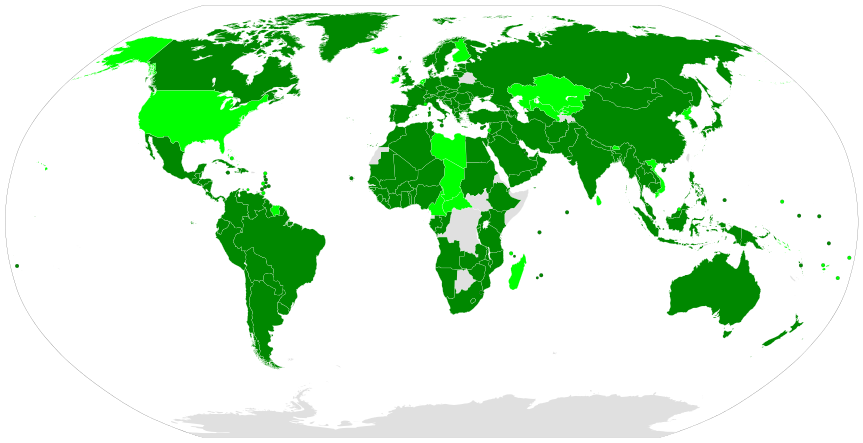
[Image description: map indicating countries that have: ratified UNCRPD, dark green; those that have signed, light green; those that have not signed, grey. Via Wikipedia, © Louperivois]

If the reader has not heard of this report, I am not surprised. I could not find any reference to it in the news section of google. As many will know, I am a bedtivist and as such reasonably aware of the UK situation. However, had it not been for Ian Jones, one of the prime movers in the conception of the WoWPetition, and now involved in the WoWCampaign, I should have known nought about it. It appears to have been completely ignored by British mainstream media (MSM). I suspect this is hardly surprising given how negative the report is, including criticism of the MSM itself.

However, I ought to add, that I also was totally unaware of the EHRC's request for information from folk with disabilities. Perhaps others did hear about it and managed to give some input and feed-back.

Throughout the report, the EHRC includes questions that the UN's oversight committee needs to put to the UK government. Rather handily they are collected together in an annex (pp.39-44) to the document. I list them below (© EHRC).

List of questions UKIM recommends that the CRPD Committee ask the UK:
1. To explain how the UK and devolved governments take into account the UNCRPD in the development and implementation of all new and existing policies, programmes, and legislation and how this action is co-ordinated at national and UK-wide level. 
2. Do the UK and devolved governments intend to implement the JCHR’s recommendation and, if so, when? 
3. To describe the measures in place to ensure that public authorities, including councils, are aware of and act in conformity with the Convention and the outcomes of those measures. 
4. To detail, with examples, how the UK and devolved governments ensure the active involvement of disabled people and children in the development and implementation of legislation and policies and the effect of this involvement. 
5. What measures the Northern Ireland Executive has taken to ensure that the legislative protections for disabled people in Britain are available in Northern Ireland. 
6. What steps has the UK taken to monitor and remedy the different treatment of disabled children seeking redress against discrimination or harassment in schools with regard to access to compensation and injunctive relief? 
7. To outline the availability of specialist services that are accessible to disabled women who experience sexual or domestic abuse. Where these services are provided locally, how do the national governments meet their responsibilities by collating information on service availability and adequacy? 
8. To evidence how local and national domestic violence strategies, policies and programmes identify the needs of disabled women and ensure disabled women are able to use domestic abuse services. 
9. To detail the methods by which the views of disabled children and young people are respected fully and taken into account in the development of UK and devolved government strategies, policies and programmes on disability and children and to evidence the effect this has had.
10. To explain the initiatives that have been taken to reduce the number of disabled children living in poverty and the effect these initiatives have had.
11. To evidence how the particular needs of looked after disabled children are being addressed, the measures that have been taken to ensure they receive the support and care needed and the outcomes achieved by those measures. 
12. To detail the steps taken and outcomes achieved to initiate and encourage public portrayals of disabled people, including through government communications that are consistent with the purpose of the Convention. 
13. To provide current data on the extent to which accessible housing is available across the UK and information on how the UK will ensure that new and existing housing is accessible and can be easily adapted when people become disabled. 
14. To explain the steps taken to improve access to the built environment including ensuring that public and private organisations comply with accessibility standards and to detail the effectiveness of these steps. 
15. To explain the steps taken to ensure that street designs are accessible to and do not put at risk people with visual and other impairments and to detail the effectiveness of these steps. 
16. To provide evidence of the effectiveness of legislation and public initiatives aimed at improving transport accessibility (including bus, rail, taxi and transport by air and sea); and to explain how monitoring is undertaken to ensure compliance with and improvements to meet its obligations under the Convention. 
17. To provide an update on the steps taken to ensure the provision of information in accessible and appropriate formats, including Easy Read, and how the effectiveness of these measures is monitored.
18. To provide information on the availability of sign language interpreters, lip speakers and palantypists and the steps being taken to increase availability and ensure disabled people can access appropriate communication support in a timely and cost-effective manner. 
19. To explain how current suicide prevention strategies take account of the needs and circumstances of disabled people, in particular those with mental health problems, and to evidence the effectiveness of these steps in reducing suicide rates. 
20. To explain the steps taken to ensure that the UK carries out full and independent investigations into deaths in mental health care settings and to evidence the effectiveness of these steps. 
21. To explain how the effectiveness of the frameworks governing mental capacity in each nation is being monitored, what actions have been taken to improve the availability of support in decision-making and the outcome of such action.
22. To explain how the effectiveness of the safeguards, which are in place to protect disabled people from abuse, in particular financial abuse, are monitored, to detail the steps taken to eradicate such abuse and to evidence the effectiveness of such steps. 
23. To explain the measures taken to improve conviction rates where the victims of crime have mental health conditions or learning disabilities and provide evidence of the effectiveness of such measures. 
24. To explain the measures taken to support ‘vulnerable witnesses’ with mental health conditions and learning disabilities and provide evidence of the effectiveness of such measures. 
25. To explain how the impact on disabled people of the reform to legal aid and reduction in grants to advice agencies in England and Wales is being monitored and the steps being taken to address any negative effect.
26. To provide evidence of the effect on disabled people of the introduction of fees for employment tribunal cases and to detail the steps being taken to ameliorate any negative effect. 
27. To detail the measures that have, or will be, put in place in each nation to ensure that those who are unable to consent to their placement or treatment in psychiatric hospitals and other care settings are protected in law and to explain the monitoring and review mechanisms that have been put in place. 
28. To set out the steps taken to safeguard disabled people in health and social care settings, to monitor the effectiveness of such measures and to explain the progress that has been made since the submission of the Initial Report. 
29. To detail the measures taken to limit the use of physical and chemical restraint and to evidence the effectiveness of such measures. 
30. To provide an evidenced update on the progress that has been made in each nation since the submission of the Initial Report to improve the reporting and prosecution of disability-related hate crime.
31. To detail the initiatives taken to address disability-related harassment and bullying in schools and to evidence the progress that is being made in addressing this issue. 
32. To explain what steps it has taken to assess the overall, cumulative impact of welfare reform, changes to social care funding and eligibility criteria and the closure of the ILF on disabled people.
33. To explain what measures have been taken, and what impact they have had, to ensure that the reduction in central government funding to local authorities and health and social care trusts in each nation does not have a negative impact on the realisation of Article 19. 
34. To provide information about the steps taken to ensure local authorities understand the Convention rights when setting eligibility criteria for the provision of social care. 
35. To provide information on the numbers of local authorities that charge for social care and how charging policies are monitored to identify the impact on disabled people. 
36. To demonstrate, with examples, the extent to which measures taken in each nation ensure the portability of social care packages. 
37. What steps are being taken to move people with learning disabilities who are living inappropriately in assessment and treatment units to more suitable accommodation where they are able to live and participate inclusively in their local communities? 
38. What measures have been taken, and what impact they have had, to ensure that the closure of the Independent Living Fund (with the exception of Scotland) does not have a negative impact on the realisation of Article 19? 
39. To set out the initiatives undertaken in each nation to promote better understanding of the needs of disabled parents and the effect these initiatives have had, and explain what information is provided to disabled parents about pregnancy, birth and caring for children.
40. To explain how reform of the Special Educational Needs (SEN) systems in England, Wales and Northern Ireland, and the current Additional Support Needs (ASN) system in Scotland, will improve educational outcomes for and participation of disabled children and young people. 
41. To confirm the position in relation to inclusive education and explain how they will ensure the education system at all levels is inclusive and geared towards supporting disabled people to achieve their full potential and participate equally in society.
42. To provide information about the measures taken to identify and reduce both unlawful and lawful exclusion of disabled pupils across the UK and to explain how progress is monitored. 
43. To explain the steps taken to improve the process of transition for disabled children and young people from children’s education services to further education and employment services in each nation, the effect these are having and how progress is monitored? 
44. What measures have been put in place to address the health inequalities faced by people with learning disabilities and mental health conditions and to provide evidence of the progress that has been made to ensure they receive appropriate and tailored health care services. 
45. To set out the measures taken to ensure awareness and availability of advocacy services for people with learning disabilities and people with mental health conditions and to provide evidence of the effectiveness of those measures. 
46. To provide evidence of what progress has been made to ensure the safeguards provided for in mental health legislation operate effectively. 
47. To provide information about the steps being taken to ensure greater respect for the human rights of disabled people in mental health settings and to evidence the effectiveness of these steps.
UKIM recommends that the CRPD Committee ask the Northern Ireland Executive: 
48. To confirm when a new Mental Health Strategy for Northern Ireland will be adopted. 
UKIM recommends that the CRPD Committee ask the UK: 
49. To provide an update on progress made to address the employment and pay gaps between disabled and non-disabled workers.
50. To explain how the actions outlined in the Initial Report have created a positive approach by employers to disabled people; whether they are having the effect of addressing employers’ negative perceptions of disabled people as employees and, if so, how these initiatives will be extended. 
51. To explain how service providers delivering the Work Programme are ensuring that disabled people with complex support requirements have equal access to work and employment opportunities. 
52. To provide information on the steps taken to identity and address the impact of the various reforms to social security on disabled people’s human rights and the realisation of Article 28. 
53. To explain the measures taken to ensure that voting ballots, postal votes and information explaining how to cast your vote are available in a range of accessible formats. 
54. To explain how new technologies are being used to overcome the barriers that prevent disabled people from voting.
55. To explain how it ensures that polling stations are accessible.
56. To provide information about the steps taken in each nation to improve the representation of disabled people on boards of public bodies and how progress is being monitored.
57. To provide up-to-date information about the number of disabled people participating in sport and physical activity and the progress made in all nations since the Initial Report. 
58. To explain how the initiatives set out in the Initial Report have increased disabled people's access to and participation in cultural life. 
59. To provide information on the statistics and research data collected by the devolved governments to meet the requirements under Article 31. 
60. To explain how the disability equality indicators have been developed in accordance with the CRPD. 
61. What steps it has taken to identify and fill gaps in the collection of disability statistics, including measures to ensure this data is disaggregated by equality characteristics. 
62. To explain how implementation of the Convention is coordinated across all the nations and whether integrated action plans will be developed, with clear actions and time-bound indicators at the UK-wide and national level.
63. How does the UK ensure coordination on implementation across Government departments, in each jurisdiction? 
64. How does the UK intend to develop the framework for promotion, protection and monitoring implementation to involve and coordinate the work of key stakeholders? 
65. What steps it has taken – including details of what practical and financial resources it has provided – to ensure that disabled people and their representative organisations are involved and actively participate in the reporting process and how this is coordinated across the UK. 
66. What steps it has taken to review, and details of any evidence relied on as the basis to retain the reservations and interpretative declaration. 

I hope the reader took the time to read the whole list, as it concisely reveals the full horror of the situation faced by impaired Brits disabled by British society due to an uncaring, intolerant and heedless UK government.

Ian Jones' own shock and exasperation is tangible in his comments attached to the update in which he shared the EHRC's interim report (bold text is this author's highlight).

I am stunned by this! The UNCRPD was ratified in the UK in June 2009 and I cannot understand why the Equalities and Human Rights Commission, the Joint Committee on Human Rights or the Disability Commissioner Chris Holmes did not ask these questions then and keep asking them until they were satisfied with the response.
Just another example of how Disabled People have been betrayed by those that claim to act in our interests.

What the heck have these organisations actually been doing whilst folk are starving, freezing, committing suicide or dying due to failure to make social security payments to which they are legally entitled or making them aware of Short Term Benefit Advances which replaced Crisis Loans?

I personally have never felt so threatened as I have in Britain under the ConDems. I pray that the general election next May brings in a more compassionate government. However, I shall not be holding my breath as four of the main parties (Conservative, Labour, Liberal Democrat and UKIP) are all neo-liberal, none of which wish to genuinely support disabled folk - in my opinion of course.

And a final comment: there appears to be no mention or reference in the whole document to folk with disabilities who come from BME or Queer sub-cultures. Like women, who are in fact mentioned, these groups are doubly discriminated against and often - as here - invisible to the Establishment.

Sunday, 22 June 2014

No More Austerity Demonstration, 21st June 2014


[Image descriptions: the crowd & the march; via One Honest Man © u/k]


According to The Guardian in an article published at 20.45:
"An estimated 50,000 people in London addressed by speakers, including Russell Brand, after People's Assembly march"
However, details of the number actually on the march are not known and are estimated at tens of thousands, because:
"The Metropolitan police [aka The Met] refused to provide an estimate."
As far as I am aware, of mainstream media (MSM) outlets, Russia Today or RT was the first to broadcast an item on the demonstration at 13.43. The news channel linked the march to recent reports on poverty in the UK:
"The Poverty and Social Exclusion project found that more than 500,000 children are living in families who can’t afford to feed them properly and 5.5 million adults have to go without essential clothing."
Under the title "Russell Brand Calls for 'joyful revolution'" ITV (via ITN) commented at 19.20 as follows:

"Comedian Russell Brand has called on thousands of protesters to be part of a "peaceful, effortless, joyful revolution" that seizes power back from Westminster.

The former Big Brother's Big Mouth presenter, who this year implored readers of the New Statesman magazine to abandon the current political system, told crowds gathered in London's Parliament Square that MPs no longer represented the people.

Speaking in the shadow of the Houses of Parliament at the end of a march marking the one-year anniversary of the People's Assembly being formed, Brand stripped off his T-shirt and replaced it with one carrying the message "Firefighters rescue people not bankers".

An estimated 50,000 people took part in the march, which started at the BBC in Portland Place where protesters accused the broadcaster of ignoring the plight of impoverished Britons."

A little later, at 20.17, The Huffington Post also reported on the protest in central London. They quoted Sam Fairbairn, the national secretary of the People's Assembly:
""Soon we will reach a size and influence where neither the BBC nor this austerity Government will be able to ignore us."
He said the group will aim to hold the biggest protest in British history later this year."
Even the normally right-wing Express newspaper reported on the events and even-handedly at that, saying:

"An estimated 50,000 people took part in the march, which started at the BBC in Portland Place where protesters accused the broadcaster of ignoring the plight of impoverished Britons."
Whilst Google did not provide me with a link, I checked Sky News and they also reported on the demo at 10.09 quoting and character-assassinating Russell Brand:
""This will be a peaceful, effortless, joyful revolution and I'm very grateful to be involved in the People's Assembly."

Around 50,000 people took part in the march and Brand was joined by speakers who also included comedian and commentator Mark Steel, MP Caroline Lucas and journalist Owen Jones."
So, the reader is perhaps wondering where are the link to and quotations from Britain's national broadcaster, paid for by every television-owner via the licence fee, the once balanced BBC. Well, Auntie Beeb apparently did not notice the marchers meeting outside its news-gathering HQ, nor the 50K folk who streamed through London. It is really odd, because I live in Manchester, and find that London and the South-East (London's Hinterland) are usually the idée fixe of the Corporation's reporting.
As on previous occasions when I have criticised the BBC, I tried to ensure that I had not missed anything from its website.

At 22.10 I searched for "austerity march". The Beeb had reported nothing, but did give a link to Russia Today:


At 22.15 I searched for "Russell Brand". Again nothing from the BBC, but links to Russia Today again plus The Guardian and The Huffington Post articles:


I tried a several searches for "London demonstration", but kept getting the following screen (I took screenshots at 22.17. and 22.19):

Finally, at 22.20 I succeeded in obtaining the following search result, which only referenced an article in the London Evening Standard from Friday:

What possible explanation could there be for the BBC failing to cover a huge demonstration about a subject clearly of national interest and, as such, importance? The ONLY possibilities now have to be political interference or political bias. Whichever: the BBC can no longer be considered an unbiased, balanced and fair news outlet.

The BBC has form: it failed to report on "Manchester’s largest protest in modern history" back in October last year when a similar number of demonstrators, including this author, protested outside the Conservative Party Conference.

Should you be unhappy with this situation you might wish to lodge a complaint; but don't raise your hopes, for as reader of this blog know, the BBC will just refuse to even take any notice. However, if like the chap in this video, you really want to have a go - he had his call cut off twice - he gives you the telephone number to ring at the end. Good luck!

For anyone interested in following events of the day, check out the hashtag #NoMoreAusterity on Twitter.


UPDATES

BBC

Some time between ten and eleven on Sunday 22nd June, the BBC finally put up a news report entitled "Thousands attend People's Assembly's first austerity protest". The full text reads:
"The first austerity protest organised by the People's Assembly campaign group has taken place in London.


Organisers say tens of thousands of people met at Portland Place and marched to Parliament Square on Saturday.
The group included politicians and union leaders and was protesting about the impact of cuts around the country."

ESTABLISHMENT
I should also point out that besides the Met refusing to provide an estimate of numbers on the actual march and the BBC failing to adequately nor appropriately report, the Guardian article referenced above also points out that the Prime Minister's spokesperson also refused to make any comment. It really does look like the Establishment closed ranks, doesn't it?

LAMPOON
[Image © Rick Campbell]


Monday, 2 June 2014

Ed Miliband, Andy Burnham, Labour & the Privatisation of the NHS


On Monday 12th May 2014, Ed Miliband gave a key-note speech on the NHS in Manchester. I was privileged to be invited, despite not being a Labour party member nor indeed affiliated to any political party - I am non-partisan.
The following is a long quotation from his (hour-long) speech:
"It is up to us. Up to a Labour government to make the changes we need to make sure the NHS is there for the years and decades ahead.
And it’s about more than that too. It’s about restoring the fundamental values of the NHS.The basic principles.It’s about ending David Cameron’s dogmatic obsession with bringing competition and privatisation into the heart of the NHS. And reducing the huge costs that have come about because of that terrible Bill. The last Labour government showed how private companies can sometimes help bring down waiting lists or provide specialist services that the NHS can’t. So, of course, there is some role for the private sector in our health service. But this government doesn’t just want to do that. It thinks competition and privatisation should be at the core of the way the NHS works. As the government says itself: if it worked for the privatised utility companies why shouldn’t it work for the NHS? Doesn’t that say it all? Well, not under my government. We’ll go back to the right principles. To the right values. Why should a hospital have to spend money on competition lawyers instead of patient care? We’ll stop that happening. We’ll stop the regulators from spending their time on free-market competition in the NHS. We’ll cut back on the consultancy costs caused by the Tories’ reorganisation. We’ll reduce the number of very senior managers who cost too much at a time when resources are so scarce. We’ll stop the threat of European competition law forcing the privatisation of services. And, friends, we’ll repeal their terrible NHS and Social Care Bill. This will save money. At least £100 million. And we’ll put all of this money straight back into improving GP care. Labour will have the right priorities. This is how we plan to improve the NHS. A comprehensive service based on the needs of the whole person. Prevention not just cure. Co-operation not privatisation. The NHS is so important to Britain."

Interestingly, The Guardian published their take on the speech at "18.17 BST", before the speech and the Q&A session were over, so it omitted Miliband's and Burnham's critical promise. The New Statesman's article admits to having been drafted over the previous weekend, but was not published until the actual day at 18.15. 


And that significant promise was also referenced in the Labour Party's second party political election broadcast from 13th May 2014, (3"20 - 3"29):
"We've got to put the right principles back at the heart of the NHS: care, and co-operation, and compassion; not privatisation and competition."

The Q&A session afterwards gave Andy Burnham an opportunity to pledge a public NHS core. I cannot find a video clip of his actual response, but, from memory, he basically stated that the core of the NHS had to be public service with a role for private companies only where they could add value to the over-all service. Ed Miliband concurred with Burnham's comments (see 2"00 - 2"15 of the video below).

According to Left Foot Forward:

"Andy Burnham has pledged to repeal the Health and Social Care Act if he becomes health secretary. This would undo the hospital closure clause, the wholesale privatisation, and reinstate the duty of the secretary of state to provide universal healthcare to the people who voted for them."

I cannot track down any coverage by the neo-liberal MSM of this stance against the privatisation of the NHS. I do not think it is because Labour has back-tracked. I suspect the dearth of reporting on this aspect is due this policy being popular and in-line with the electorate, which is far to the left of all main political parties, excepting the Greens.

I believe both Miliband and Burnham are honest men, honourable politicians; they will keep to their word I suspect.